Harmful language in schools is often treated as a discipline issue, a moment to correct behavior and move on. But for students who experience it, those words linger. They shape how safe students feel, whether they belong, and whether adults can be trusted to protect them.
Language is never neutral. The words used in hallways, classrooms, and online spaces shape school culture just as much as policies or programs. When harmful language goes unaddressed or is minimized, students learn that silence is the system’s response.
Addressing harmful language in schools requires more than good intentions. In a recent Parsec webinar series, Dr. Angie Barfield spoke about how this topic requires awareness, adult mindset shifts, clear response protocols, and systems that genuinely listen to students. That last piece, listening, is often where schools struggle most.
Why Harmful Language in Schools Is a Climate Issue
Harmful language in schools is not just an interpersonal problem. It is a school climate issue.
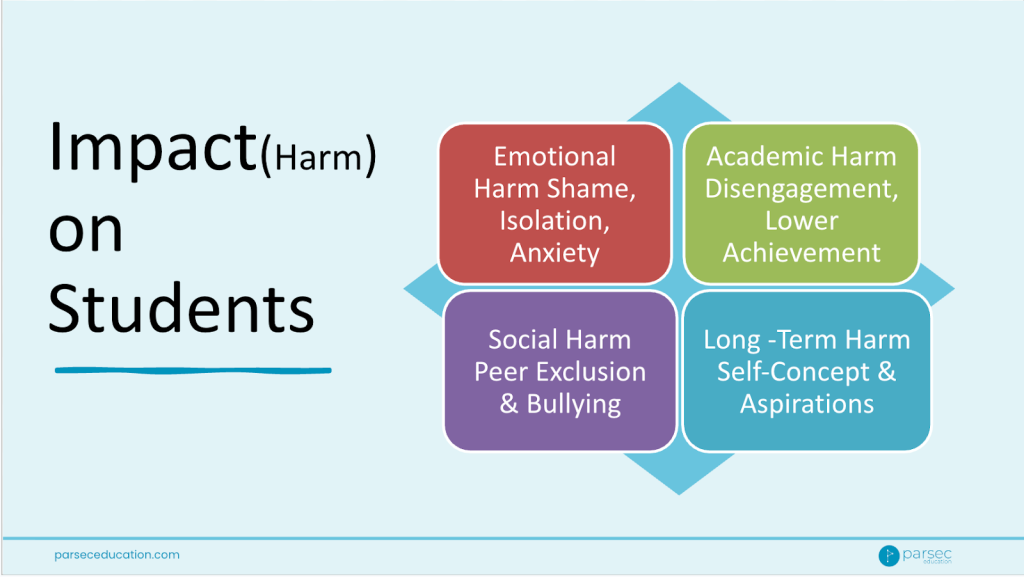
The U.S. Department of Education defines school climate as the quality and character of school life, including relationships, safety, and belonging. When students experience biased or demeaning language, especially without adult intervention, their perception of safety and trust declines.
The Centers for Disease Control and Prevention CDC links negative school environments to increased anxiety, depression, and disengagement among youth. Language is often one of the earliest indicators that something in the environment is breaking down.
Yet many districts lack reliable protocols and ways to capture how students are experiencing school climate in real time. Traditional surveys are infrequent, and discipline data often tells the story too late.
This is where tools like Parsec Real play a critical role. By giving students a way to share feedback through text, audio, or video, schools can identify climate concerns earlier and respond before harm escalates.
Why Accountability Fails Without Awareness
Many educators want to respond well to harmful language but get stuck at intent.
“I didn’t mean it that way.”
“It was just a joke.”
For students, impact matters more than intent. Learning for Justice emphasizes that dismissing impact shuts down dialogue and prevents growth.
This is where student belonging is either reinforced or damaged. When students speak up and are met with defensiveness or silence, they learn their voice is conditional.
Schools that prioritize listening, especially anonymous or low-barrier listening, are better positioned to build trust. With Parsec Real, students can share experiences privately and in their own words, helping educators understand not just what happened, but how it felt and why it mattered.
That insight changes how accountability conversations begin.
Before Students Change, Adults Have to Shift
Sustainable change starts with adults.
Trauma-informed practices remind us that students bring lived experiences into every interaction. Language can trigger emotional responses long after the moment has passed.
The Substance Abuse and Mental Health Services Administration (SAMHSA) defines trauma-informed care as recognizing the impact of trauma and actively resisting re-traumatization.
Adult mindset matters because:
- Students watch how adults respond
- Silence communicates acceptance
- Inconsistent responses undermine credibility
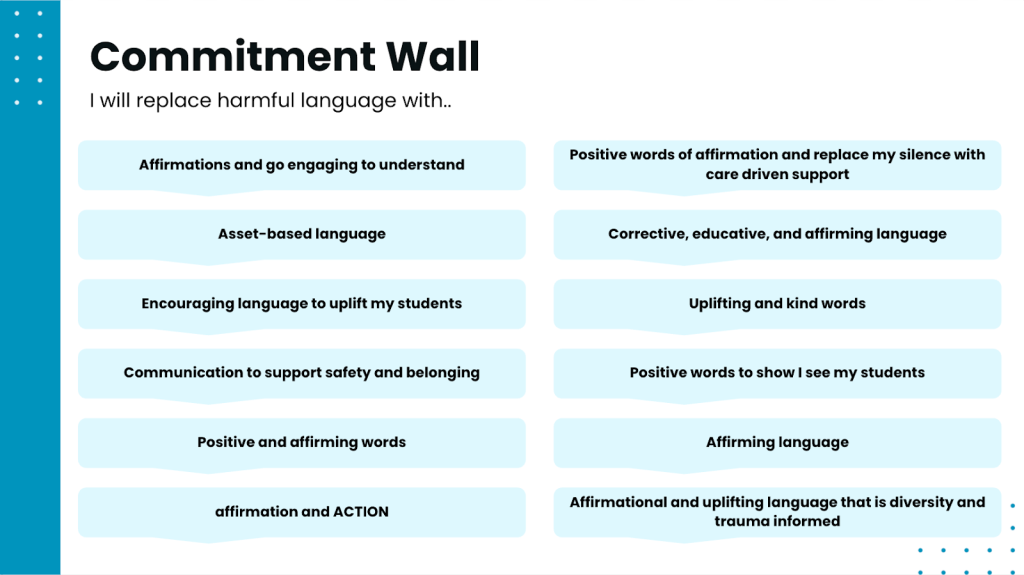
The Collaborative for Academic, Social, and Emotional Learning (CASEL) reinforces that adult reflection and capacity are essential for systems change.
Listening tools support this internal work. When educators review student feedback collected through Parsec Real, patterns emerge—revealing blind spots, inconsistencies, and opportunities for growth that might otherwise remain invisible.
Responding to Harmful Language With Care and Accountability
Responding to harmful language requires structure, not improvisation.
Effective responses are:
- Consistent
- Trauma-informed
- Focused on accountability and healing
Learning for Justice recommends response protocols that prioritize safety, emotional de-escalation, documentation, and follow-up.
The National Center on Safe Supportive Learning Environments emphasizes that punitive-only responses rarely change behavior and often worsen trust.
Follow-up is where many systems break down. Students may be asked to write reflections they cannot complete, or adults may assume harm has been resolved without checking in.
With Parsec Real, schools can gather post-incident feedback from impacted students—through audio, video, or text—making follow-up more accessible and more human. This helps ensure accountability is paired with healing, not assumption.
If Students Don’t Feel Heard, Change Won’t Last
Students notice everything. They see what adults ignore, excuse, or rush past.
Student voice in schools is essential to building trust. The U.S. Department of Education identifies student engagement and voice as key drivers of improvement.
The American Institutes for Research (AIR) notes that schools with strong feedback loops are better equipped to address climate challenges proactively.
By allowing students to share feedback in multiple formats and at multiple moments, not just once a year, Parsec Real helps schools move from reactive to responsive. Over time, leaders can track patterns, compare experiences across groups, and make informed decisions rooted in lived experience.
From Awareness to Action
Harmful language in schools cannot be addressed through silence, intention, or one-time training. It requires systems that listen, adults willing to reflect, and responses grounded in care and accountability.
When schools commit to:
- Building awareness
- Shifting adult mindsets
- Responding consistently
- Centering student voice
They create environments where students feel seen, protected, and valued.
If your district is ready to move from awareness to action, Parsec Real can help you listen better—and act with confidence.
👉 Request a demo: https://www.parseceducation.com